Clay County · Sub-Zero only
Sub-Zero repairs at Hibernia Plantation, planned for one visit
The far end of our patch, where the drive is longer and the questions on the phone do more work, because a second visit costs everybody a whole afternoon.
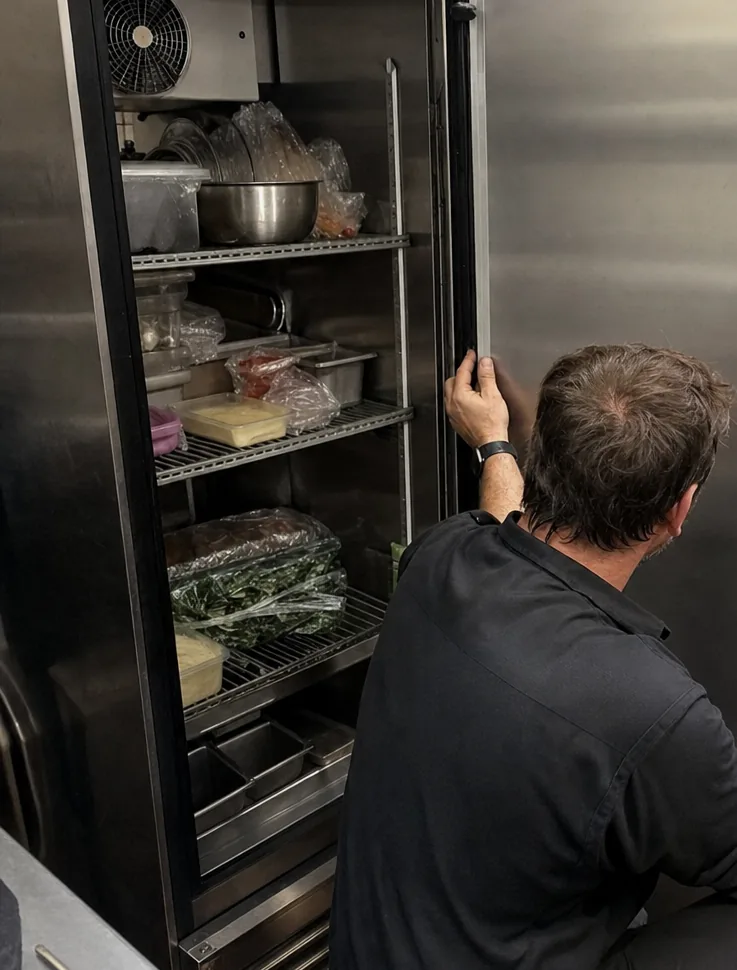
South Fleming Island thins out. Lots get larger, the river frontage is older than the master-planned communities north of it, and houses sit further apart and further from the main roads. None of that changes how a refrigerator works. It changes how a service call has to be planned.
Longer drives, so fewer visits
This is the far end of the patch, and the honest implication is that we try hard to make a Hibernia call a single visit.
That means we ask more questions on the phone: which compartment is wrong, what the display says versus what a thermometer sitting in the cabinet says, whether anything happened during a storm, when the condenser was last cleaned, whether the ice bin holds loose cubes or a slab, and whether the unit is on its original supply or something added later. It means we carry the parts those answers make likely rather than the parts that are merely possible. And it means that when a control or a sealed system is genuinely implicated and a part has to be ordered against the serial number, we tell you at the first visit exactly what the second one involves and what it costs.
Have the model and serial from the plate inside the cabinet ready when you call. On built-in refrigeration, components are revised within a model designation, so the plate is what decides which part is correct — not the badge on the door.
Older frontage, mixed installations
The river frontage down here predates the planned communities, and the kitchens show it. We find built-ins retrofitted into openings that were cut rather than designed, columns sitting in cabinetry built by three different people across twenty years, and clearances at the hinge side that were tight the day the unit went in. Those installations produce doors that will not self-close the last inch, trim that fouls a swing, and grilles that are harder to reach than the service instructions assume.
That is worth knowing before a visit because it changes the time on site rather than the diagnosis, and because none of it is fixed with parts. It is fixed with adjustment, and occasionally with a frank conversation about the cabinetry.
Storm exposure at the end of the line
Spread-out service areas tend to be restored later after a storm, and a long outage has a specific consequence that a brief one does not. A cabinet that has been off for a day and a half is warm all the way through, so when supply returns the compressor starts against a fully warmed load on a grid that is still unstable. Northeast Florida averages roughly 68 thunderstorm days a year before any named storm is counted, and the named storms since 2016 have each taken parts of this region off supply for more than a day.
The result we see afterwards is the half-survived board: a panel reporting a temperature the cabinet is not holding, an alarm for a condition that is not occurring, one sealed system running and the other not. Those faults are intermittent and thermally dependent, which is why “we unplugged it and it seemed fine” is not reassuring, and why the failure often surfaces weeks after the storm that caused it. We test sensors, connectors and supply before condemning a control, because the control is the expensive part and the easiest one to blame.
Generators and second units
Houses out here are more likely to have a generator, and more likely to have a second refrigerator or a wine cabinet somewhere that is not the kitchen. Both are worth mentioning at booking.
A unit that has ridden out outages on generator power has been fed by a different quality of supply than a utility feed, and that is context we want before we look at a control. A wine cabinet that nobody opens for a month is the classic silent drifter: nothing in it spoils visibly, the display keeps reporting what it believes, and the first evidence is in the glass. If there is a second unit in a garage or a pool house, tell us at booking and we will look at both while we are there rather than making the drive twice.
Flat diagnostic fee, credited toward the repair. Written estimate before any part is ordered. Sub-Zero refrigeration only.
- Measure, do not read
Both compartments get a probe of our own before anything is opened. A panel reports what its sensor believes, and the gap between that number and the cabinet is often the whole fault.
- Heat rejection
The upper grille comes off and the condenser gets assessed. Every measurement taken afterwards means something different if the unit cannot dump heat, so nothing is judged before this.
- Air and water paths
Evaporator frost pattern, fan operation, the drain line and where melt water is collecting. The location of the water usually names the failed component without a meter.
- Doors, panels and level
Paper test around the whole seal, hinge condition, the hang of a cabinet-shop panel, and whether the cabinet is still plumb. The cheapest fault on the machine, and the one that makes every other symptom worse.
- Supply, sensors, then the control
Voltage at the outlet, the circuit it shares, harness connectors and thermistor readings — all of it before a board is condemned. The expensive part is the easiest one to blame.
- Sealed system last
Leaks, restrictions and compressors are real and we repair them, but only once the five steps above are clear. Refrigerant work is done by EPA Section 608 certified technicians.
The order is not habit. Each step changes what the next one means, and the cheap, reversible checks come first so that nobody pays for a diagnosis the previous step would have made unnecessary. No part is ordered until the sequence has produced an answer and you have approved a written figure.
What we get called out for here
What it costs
What does a repair in Hibernia Plantation cost?
The bands this fault lands in: $260 to $810, depending on which component it turns out to be.
$80 Flat $80 diagnostic covering the visit and the full diagnostic sequence, credited toward the repair once you approve the work.
| Repair | Typical range |
|---|---|
| Diagnostic visit | $80 flat, credited |
| Defrost heater, thermostat or sensor | $260–$630 |
| Electronic control board | $430–$810 |
| Evaporator or condenser fan motor | $260–$570 |
90 days on labour, 365 days on parts, genuine oem parts. The whole table is on what it costs.
Asked on the phone
What do people in Hibernia Plantation ask first?
- Why so many questions on the phone before you come out here?
- Because the drive is long enough that a second visit costs everybody an afternoon. What the cabinet is doing, when it started and what the ice looks like decide what rides on the van, and the more of that we have in advance the better the odds of finishing in one trip.
- Can a repair at this end of the island be finished in one visit?
- Often, and when it cannot be you are told at the first one. Seals, sensors, fans and drain components are stocked. Controls and sealed-system parts are ordered against the serial number inside your cabinet, and that is said with the written figure rather than afterwards.
- Restoration reaches us last after a storm. Does that change the repair?
- It changes what gets looked for. A longer outage and a later restoration mean more brownout cycling before the supply settles, and that is what reaches control electronics. A board that half-survives behaves erratically rather than dying outright, and board work runs $430–$810.
Customer reviews
Calls from Hibernia Plantation
Reviews left after visits in this part of the county, printed in full.
4.44.4 out of 5 across all 63 reviews published on this site
4 out of 5
Good work and a careful explanation of why the slab in the bin was not an ice fault at all. The only frustration was waiting for a valve to arrive, which he did warn me about at the first visit.
Beatrix N.June 2026
5 out of 5
We lost power for most of a day and the unit came back beeping and not cooling. He checked the supply first, then the board, and found a relay welded shut. He replaced it and explained why an outage does that.
Linnea D.May 2026
4 out of 5
The freezer door had stopped sealing at the bottom and we were mopping up water. He replaced the gasket, then spent as long again squaring the door so the new one would not distort the same way.
Wendell T.July 2026
All 63 of them, three-star entries included, are on what owners said after the visit.
Book a diagnostic visit
One flat fee to find out what is actually wrong, credited toward the repair. We cover Orange Park and the rest of Clay County within about 40 miles.
- Diagnostic
- $80
- Labour warranty
- 90 days
- Parts warranty
- 365 days
- Monday – Friday
- 08:00 – 18:00
- Saturday
- 09:00 – 16:00
Written estimate before any work starts. No parts ordered until you approve the figure. Closed Sunday. Calls placed after hours are returned the next working morning.